If you want to ensure your feline friend gets the most out of their cat tree experience, then the placement of this beloved furniture is key. Maximizing your cat’s enjoyment and accessibility is crucial, and in this article, we’ll explore the importance of cat tree placement. From finding the ideal location in your home to understanding your cat’s preferences, we’ll provide you with helpful tips and insights to ensure your furry companion is consistently entertained and content on their personal feline paradise. So let’s dive into the exciting world of cat tree placement and create the perfect haven for your beloved cat.
Choosing the Right Location
Consider your cat’s preferences
When choosing the location for your cat tree, it’s important to consider your cat’s preferences. Some cats enjoy being near the action and will prefer a more central location in your home, while others may prefer a quieter spot where they can relax undisturbed. Take note of where your cat tends to spend most of their time and try to find a location that aligns with their preferences.
Observe your cat’s behavior
Another important factor to consider is your cat’s behavior. Does your cat enjoy watching birds outside the window or basking in the sunlight? Observing their behavior can help you determine the ideal location for the cat tree. If your cat loves looking out the window, consider placing the tree near a window where they can have a good view. If they enjoy privacy, find a more secluded spot.
Find a quiet and low-traffic area
Cats appreciate a calm and quiet environment, so it’s best to choose a location for the cat tree that is away from high-traffic areas. Avoid placing it near doorways or in the middle of a busy room. This will help ensure that your cat feels safe and comfortable when using the tree.
Ensure the cat tree is near a window
Many cats enjoy watching the world outside, so it’s beneficial to position the cat tree near a window. This allows them to observe birds, squirrels, or other outdoor activities. Plus, the natural light can be beneficial for their overall well-being. Just make sure the tree is secure and stable near the window.
Avoid placing near heating/cooling vents
While it’s tempting to position the cat tree near heating or cooling vents for extra comfort, it’s important to avoid doing so. Cats are sensitive to temperature changes, and being too close to a vent could subject them to uncomfortable hot or cold air. Instead, find a spot that is away from vents to ensure your cat’s comfort.
Determining Height and Stability
Choose the appropriate height
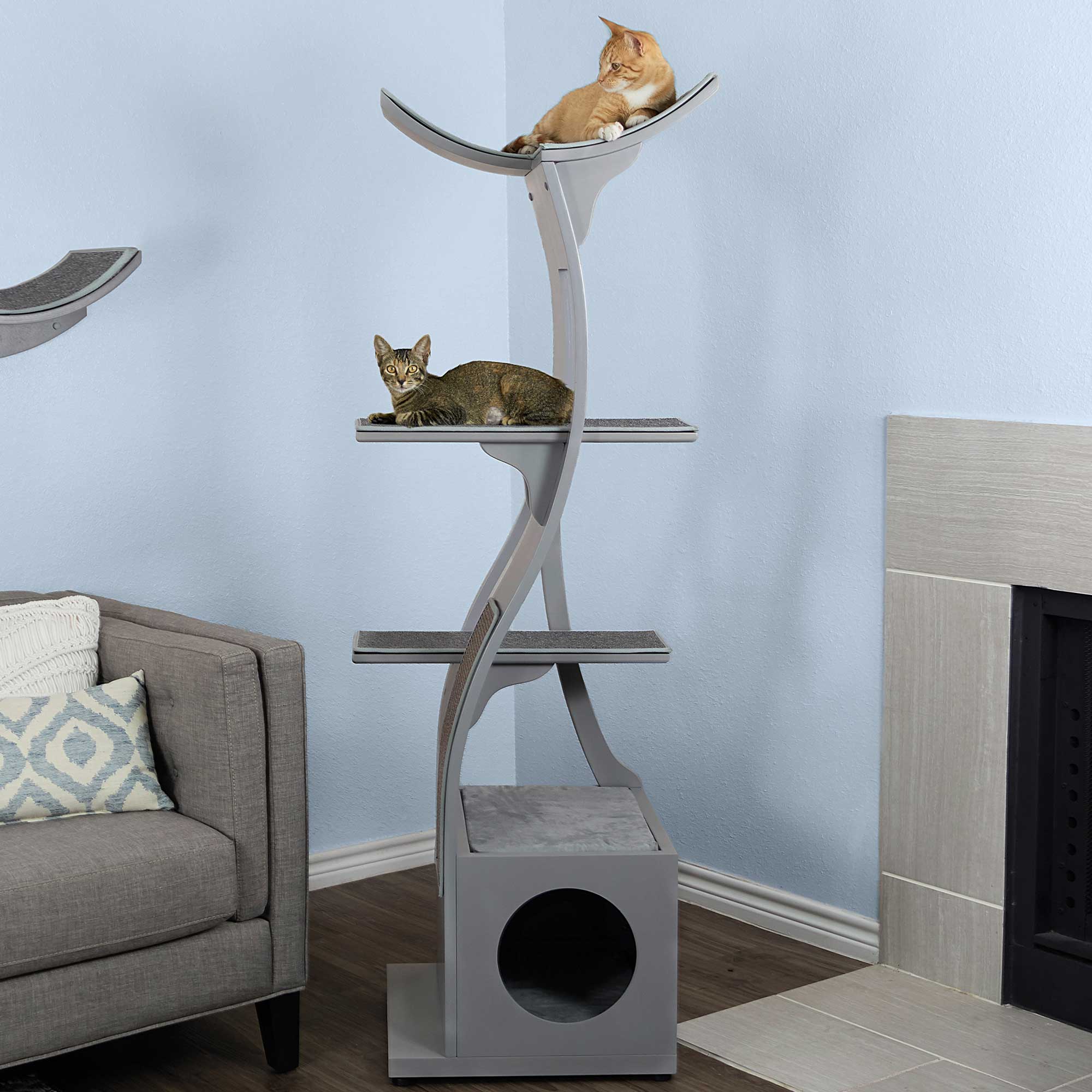
When selecting a cat tree, consider the height that will be suitable for your cat. Cats love to climb and perch up high, so choose a tree that offers various levels of elevation. This will give your cat the opportunity to satisfy their natural instinct to climb and survey their surroundings from above.
Check the stability of the cat tree
Stability is of utmost importance when it comes to cat trees. Before purchasing or installing a cat tree, make sure it is sturdy and can withstand your cat’s active behavior. Give it a gentle shake or test out the stability by applying some pressure. The last thing you want is for the tree to wobble or tip over when your cat is using it.
Consider the weight and size of your cat
Different cat trees have different weight and size limits. It’s essential to consider the weight and size of your cat when choosing a tree. Ensure that the tree you select can comfortably accommodate your cat’s size and weight. This will ensure the tree remains stable and doesn’t pose any safety risks.
Ensure the cat tree does not wobble or tip over
Aside from checking the overall stability of the cat tree, pay close attention to any wobbling or tipping. If you notice any instability, it’s crucial to address it immediately. Reinforce the base, tighten screws, or make any necessary modifications to ensure the cat tree remains safe and secure for your feline friend.
Providing Platforms and Perches
Include multiple platforms and perches
Cat trees with multiple platforms and perches offer more opportunities for your cat to climb, jump, and rest. Having different levels allows them to explore and choose their preferred spots. Look for trees with a variety of platforms and perches to make their playtime more enjoyable and engaging.
Offer different levels of elevation
Cats love to be up high, so providing different levels of elevation will enhance their experience with the cat tree. This allows them to feel secure and have a sense of mastery in their environment. Consider including platforms at various heights, giving your cat the freedom to choose their preferred vantage point.
Ensure platforms are large enough for cat’s comfort
When choosing a cat tree, ensure that the platforms are large enough for your cat to comfortably rest and move around. Cats need space to stretch out and feel at ease while perched on the platforms. Take into account the size and weight of your cat when selecting a cat tree to ensure the platforms can adequately support them.
Consider shelf depth and stability
The depth of the shelves is an important consideration when choosing a cat tree. Cats like to curl up or stretch out on the platforms, so opt for shelves that are deep enough to accommodate their lounging preferences. Additionally, make sure the shelves are stable and securely attached to the tree, so your cat can confidently relax without any risk of falling.
Include cozy hiding spots or cubbies
In addition to platforms and perches, it’s beneficial to include cozy hiding spots or cubbies in the cat tree. These enclosed spaces provide a safe and secure retreat for your cat, especially if they prefer privacy or need a break from the hustle and bustle of the household. Consider including cubbies or hiding spots that are plush and inviting for your cat to curl up inside.
Incorporating Scratching Surfaces
Choose cat trees with built-in scratching posts
Scratching is a natural behavior for cats, and providing them with appropriate surfaces to scratch is essential. Look for cat trees that come with built-in scratching posts. These posts should be covered in sisal or another durable material that will withstand your cat’s scratching habits. Having scratching surfaces readily available on the cat tree will help discourage your cat from scratching your furniture or walls.
Provide different textures for scratching
Cats often have preferences when it comes to the texture they like to scratch. Some may prefer sisal rope, while others may prefer carpet or corrugated cardboard. To cater to your cat’s individual preferences, consider incorporating cat trees that offer different textures for scratching. This will ensure that your cat has options and can satisfy their scratching needs.
Position scratching surfaces strategically
When placing the cat tree, make sure the scratching surfaces are strategically positioned. Cats often like to stretch and scratch after waking up from a nap, so it can be beneficial to have scratching posts near the platforms or perches where they tend to rest. This encourages your cat to engage with the scratching surfaces in a natural and satisfying way.
Avoid placing near furniture or walls
To prevent your cat from being confused about where to scratch, avoid placing the cat tree directly next to your furniture or walls. If the cat tree is too close to other surfaces that your cat likes to scratch, they may still be tempted to scratch on those instead. Keeping some distance between the cat tree and furniture or walls will help reinforce the appropriate scratching behavior.
Adding Interactive Toys and Accessories
Incorporate interactive toys
Make the cat tree even more entertaining by incorporating interactive toys. These toys can include hanging balls, strings, or other attachments that your cat can bat around and play with. Interactive toys add an extra level of engagement and mental stimulation for your cat while they are on the cat tree.
Consider dangling toys and balls
Dangling toys and balls that hang from the cat tree are particularly enticing for cats. They can bat at these toys, satisfying their natural hunting instincts. Choose toys that are securely attached to the tree and can withstand your cat’s playfulness. This will provide hours of fun for your feline companion.
Include catnip-infused accessories
If your cat responds positively to catnip, consider incorporating catnip-infused accessories into the cat tree. Catnip can be a great way to attract your cat’s attention and make the tree even more appealing. Whether it’s a catnip-infused toy or a scratcher, the scent of catnip is likely to pique your cat’s interest and keep them engaged with the tree.
Attach feather teasers or wand toys
Feather teasers or wand toys are excellent additions to a cat tree. They can be attached to the tree at various heights, allowing your cat to jump and play with them. These toys simulate prey and encourage your cat to engage in interactive play. By attaching feather teasers or wand toys, you are providing your cat with a fun and stimulating experience on the cat tree.
Creating Vertical Climbing Opportunities
Include vertical climbing posts or ramps
Vertical climbing is a natural behavior for cats, so it’s important to provide them with opportunities to climb. Look for cat trees that include vertical climbing posts or ramps. These features allow your cat to exercise and engage in their natural instinct to climb. Vertical elements will add more variety and enjoyment to your cat’s experience on the tree.
Ensure easy access between platforms
To encourage your cat to move freely between platforms, ensure there are easy access points. Incorporate ramps, steps, or climbing posts that connect the different levels of the cat tree. Cats love to explore their environment, and having easy access between platforms will make it more convenient and enjoyable for them to move around.
Introduce climbing wall elements
For the more adventurous cats, consider incorporating climbing wall elements into the cat tree. These can be in the form of vertical climbing surfaces, such as carpeted panels or fabric-covered walls. Climbing wall elements provide additional climbing opportunities and can challenge your cat’s agility and coordination.
Consider incorporating a cat ladder
If your cat tree is particularly tall or has multiple levels, consider adding a cat ladder. Cat ladders are mini staircases that provide easy access to higher platforms. They are especially useful for younger or older cats who may have difficulty jumping or climbing. Cat ladders give them a convenient way to reach their desired level without exerting too much effort.
Keeping the Surrounding Environment Stimulating
Place the cat tree in an active area
To keep your cat engaged and entertained, place the cat tree in an area of your home where there is a lot of activity. Cats are curious creatures and enjoy being in the center of action. This will give them the opportunity to observe and interact with their human family members, making their time on the cat tree even more enjoyable.
Position it near areas of human activity
Cats are social animals and often like to be near their human companions. Position the cat tree near areas where you spend a lot of time, such as the living room or home office. This allows your cat to be a part of your daily activities, providing them with companionship and mental stimulation.
Consider visual stimulation from windows
In addition to human activity, cats also enjoy visual stimulation from the outside world. If possible, position the cat tree near a window. This gives your cat a view of the outdoors, where they can watch birds, squirrels, or other wildlife. The visual stimulation from the window can provide entertainment and engage their natural instincts.
Include toys and puzzles in the surrounding area
To enhance the overall experience around the cat tree, include additional toys and puzzles in the surrounding area. This can include interactive treat toys, puzzle feeders, or even scratching posts placed strategically nearby. By incorporating these elements, you create an engaging environment that encourages your cat to explore, play, and interact with their surroundings.
Ensuring Safety and Comfort
Check for secure and sturdy construction
Safety should always be a top priority when choosing a cat tree. Before purchasing, thoroughly check the construction of the tree. Look for signs of quality craftsmanship and ensure that all parts are securely attached. A well-built cat tree will provide a safe and durable play environment for your cat.
Inspect for any sharp edges or loose parts
When setting up the cat tree, inspect it carefully for any sharp edges or loose parts. Run your hand along the tree to check for any rough or jagged areas that could potentially harm your cat. Additionally, give it a gentle shake to ensure there are no loose or unstable parts that could pose a safety risk.
Choose cat trees with non-toxic materials
Cats may interact with the cat tree by licking, scratching, or rubbing against it. To ensure their safety, choose cat trees made from non-toxic materials. Avoid trees that use chemicals or treatments that could be harmful if ingested. Opt for materials such as natural wood, sisal, and non-toxic fabrics to provide a safe and healthy environment for your cat.
Consider comfort features like plush cushions
To make the cat tree even more inviting and comfortable for your cat, consider adding plush cushions or pads to the platforms and perches. Cats enjoy soft and cozy surfaces where they can curl up for a nap. Providing comfortable cushioning will entice your cat to spend more time on the tree, ensuring they have a comfortable resting spot.
Making Adjustments Based on Cat’s Feedback
Observe your cat’s interaction with the cat tree
After setting up the cat tree, spend time observing your cat’s interaction with it. Notice which platforms or perches they prefer, how often they use the scratching posts, and if they show any signs of discomfort or avoidance. This will help you understand your cat’s preferences and identify any adjustments that may be necessary.
Evaluate their preferences and usage patterns
Based on your observations, evaluate your cat’s preferences and usage patterns. Do they prefer higher or lower platforms? Do they spend more time playing with the interactive toys or scratching the posts? Understanding your cat’s preferences will allow you to tailor the cat tree’s setup to better match their needs and maximize their enjoyment.
Consider repositioning or adding/removing accessories
If you notice that your cat is not using certain areas or accessories of the cat tree, consider repositioning them or removing them altogether. Experiment with different configurations and placements to see what your cat responds to the most. Additionally, you can also consider adding new accessories or toys to further increase their interest and engagement.
Monitor for any signs of discomfort or avoidance
As you make adjustments to the cat tree, continue to monitor your cat for any signs of discomfort or avoidance. If your cat seems hesitant to use the tree or avoids certain areas, it could indicate that those spots are not meeting their needs. Pay attention to their body language, such as flattened ears or an anxious posture, and adjust accordingly to ensure their comfort.
Maintaining and Cleaning the Cat Tree
Regularly inspect and clean the cat tree
Regular inspections and cleaning are essential for maintaining the cat tree’s condition and your cat’s health. Set a routine to inspect the tree for any signs of wear and tear, loose parts, or damaged surfaces. This will allow you to address any issues promptly and maintain the longevity of the cat tree.
Remove any hair or debris
Cats naturally shed hair, and it can accumulate on the cat tree over time. To keep the tree clean and hygienic, regularly remove any accumulated hair or debris. Use a brush or a lint roller to effectively remove hair from the surfaces of the tree. This will not only keep the cat tree looking tidy but also prevent any potential health hazards for your cat.
Clean surfaces with pet-friendly disinfectants
To sanitize the cat tree, use pet-friendly disinfectants that are safe for your cat. Avoid using harsh chemicals or cleaners that could be toxic to your feline friend. Gently wipe down the surfaces of the tree, paying close attention to areas that your cat frequently uses or comes into contact with. This will help create a clean and healthy environment for your cat.
Replace worn-out parts or accessories
Over time, parts or accessories of the cat tree may become worn out or lose their effectiveness. Whether it’s a scratching post that is fraying or a toy that is no longer engaging, it’s important to replace any worn-out parts or accessories. This will ensure that the cat tree remains functional and enjoyable for your cat in the long run.