Have you ever wondered if investing in a cat tree for your feline friend is really worth it? If so, you’re not alone. Many cat owners ponder over whether these towering structures are truly worthwhile. In this article, we will explore the benefits of cat trees and why they might just be a worthy investment for both you and your beloved feline companion.
Benefits of Cat Trees
Provides a Sense of Ownership
Cat trees are a great way to give your furry friend a sense of ownership. With their own designated space, cats can establish territory and claim the tree as their own. This can be especially beneficial in households with multiple cats, as it helps to prevent conflicts and minimize territorial disputes. Cat trees provide a safe and secure place for your cat to retreat and relax, and they can truly make your feline friend feel like the king or queen of the house.
Promotes Exercise and Physical Activity
Cats are natural climbers and love to explore their surroundings. Cat trees provide the perfect opportunity for them to indulge in their climbing instincts. Regular physical activity is essential for cats to maintain a healthy weight and overall well-being. By having a cat tree in your home, you are encouraging your furry friend to engage in exercise and play, which can help to prevent obesity and associated health issues. Whether they are jumping from perch to perch or using the scratching posts to stretch and scratch, cat trees offer a fun and engaging way for cats to stay active.
Helps with Scratching Behavior
One of the common challenges faced by cat owners is dealing with their cat’s scratching behavior. Cats have a natural instinct to scratch, which helps them to shed dead layers of their claws and mark their territory. Unfortunately, this instinct can lead to damage to furniture, walls, and other household items. Cat trees come to the rescue by providing designated scratching posts and surfaces. With the right cat tree, you can redirect your cat’s scratching behavior away from your precious belongings and onto a more appropriate surface. This not only saves your furniture but also helps to keep your cat’s claws healthy and strong.
Provides Vertical Space for Cats
Cats are known to appreciate vertical spaces, as it allows them to observe their surroundings from a higher vantage point. Cat trees offer multiple levels and perches that allow cats to satisfy their natural instincts to climb and observe. By providing vertical space, cat trees create a stimulating environment for your cat, which can help to alleviate boredom and prevent behavioral problems associated with being confined to a horizontal space. It also gives your cat a sense of security and control, making them feel more confident and at ease in their environment.
Offers a Safe and Comfortable Resting Spot
After a long day of playing, climbing, and exploring, cats need a cozy spot to rest and recharge. Cat trees often include plush perches or hideaway spots where your cat can curl up and take a nap. These resting spots provide a sense of security and comfort, allowing your cat to relax and unwind in their own personal sanctuary. The elevated perches can also serve as a lookout, giving your cat a perfect vantage point from which they can keep an eye on their surroundings while enjoying their moments of tranquility.
Factors to Consider before Buying a Cat Tree
Quality and Durability
When it comes to cat trees, quality and durability are of utmost importance. You want a cat tree that can withstand the test of time and hold up to the playfulness and energy of your feline friend. Look for cat trees made from sturdy materials such as solid wood or durable PVC. The construction should be solid, with strong joints and secure fastenings. It’s also worth considering the overall stability of the cat tree, ensuring it won’t tip over or wobble when your cat jumps on or off it.
Size and Design
Before buying a cat tree, consider the available space in your home and choose a size and design that fits your needs. Measure the height, width, and depth of the area where you plan to place the cat tree to ensure it will fit comfortably. Additionally, consider the layout and design of the cat tree. Look for one that offers a variety of perches, hideaways, and scratching posts to cater to your cat’s preferences. Some cat trees even come with additional features like hanging toys or built-in catnip dispensers to keep your furry friend entertained.
Stability and Safety
Safety should always be a top priority when selecting a cat tree. Look for a cat tree with a solid and stable base to prevent any accidents or topples. The materials used should be non-toxic and free from any potential hazards. It’s also important to ensure that the cat tree is well-built and can handle the weight and movements of your cat without collapsing or tipping over. Additionally, check if the cat tree has any sharp edges or small parts that could cause harm.
Number and Type of Perches and Platforms
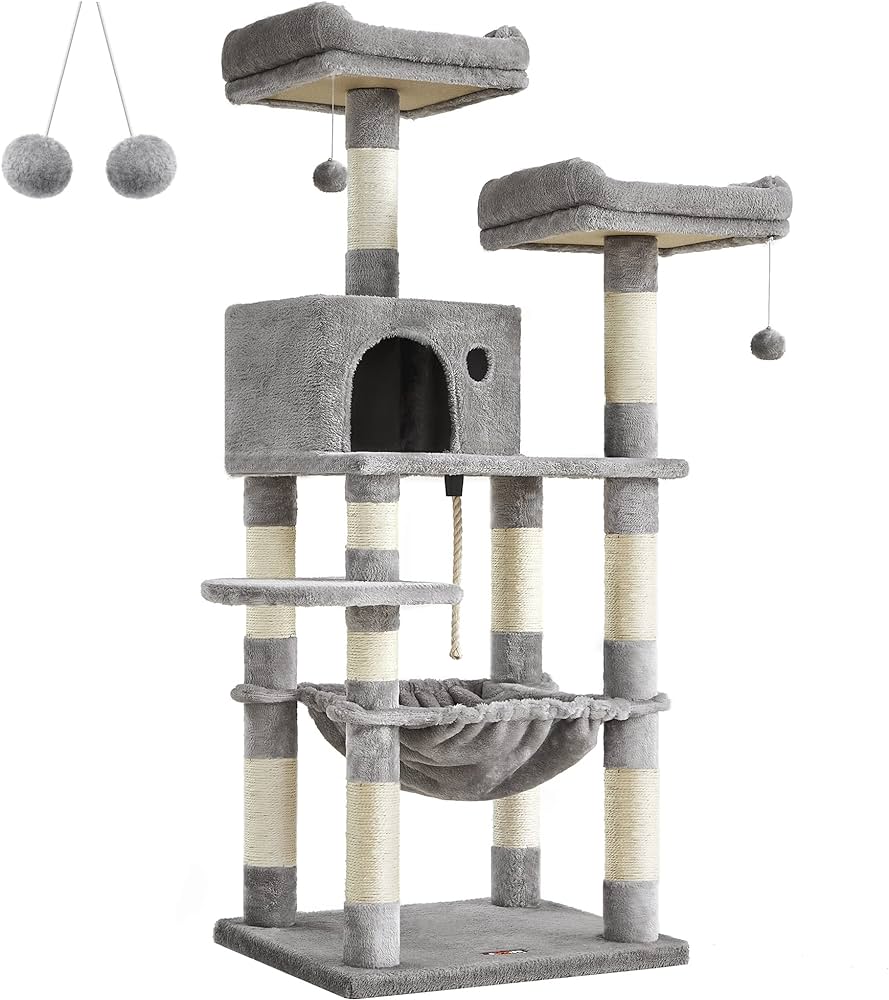
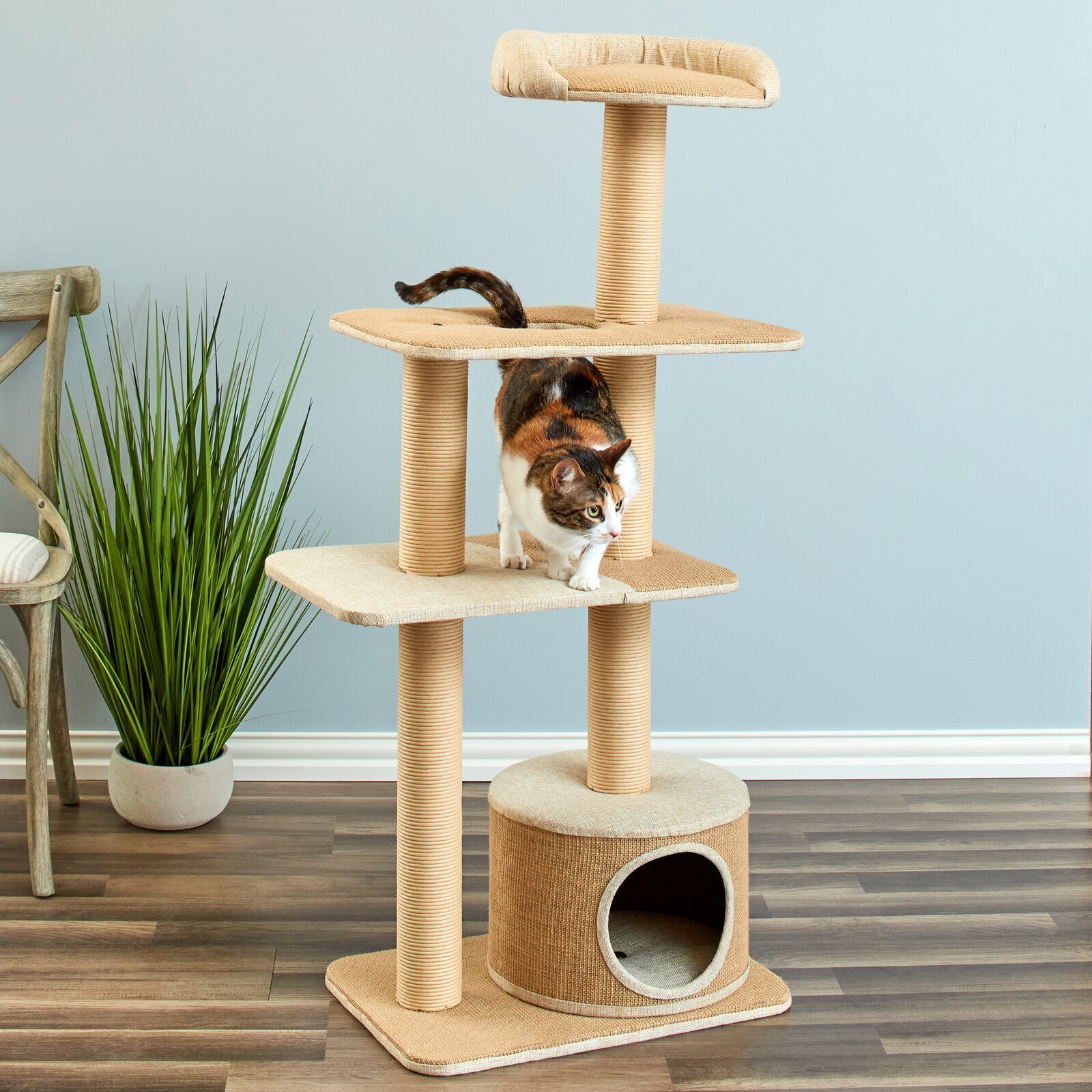
Cat trees come in various configurations and offer different numbers of perches and platforms. Consider your cat’s preferences and habits when choosing a cat tree. Does your cat enjoy high perches or prefer hiding spots? Are they more inclined to climb or lounge? Choose a cat tree that has enough perches and platforms to cater to your cat’s needs and interests. You may also want to look for cat trees that have different types of platforms, such as hammocks, baskets, or even enclosed spaces, to provide a range of options for your cat to choose from.
Material and Upholstery
The type of material used in the construction of the cat tree is an important factor to consider. Opt for materials that are easy to clean and maintain, as cats can be messy creatures. Look for cat trees with removable and washable covers or upholstery that can withstand frequent cleaning. Additionally, consider the texture of the material. Cats love to scratch, so choosing a cat tree with surfaces that mimic tree bark or sisal rope can be more enticing for them and help to redirect their scratching behavior away from your furniture.
Cost of Cat Trees
Different Price Ranges Available
Cat trees come in a wide range of prices, from budget-friendly options to more luxurious models. The cost of a cat tree can depend on factors such as size, material, design, and brand. It’s important to determine your budget and find a cat tree that fits within your price range. While it may be tempting to opt for a cheaper cat tree, it’s important to consider the quality and durability. Investing in a higher-quality cat tree may save you money in the long run, as it will last longer and require fewer replacements.
Consider Long-term Cost Benefit
When considering the cost of a cat tree, it’s important to take into account the long-term benefits it provides. A well-designed and durable cat tree can last for many years, providing endless hours of entertainment and comfort for your cat. By promoting exercise, reducing destructive behavior, and offering a safe space for rest, a cat tree can help to prevent costly issues such as obesity, furniture damage, and behavioral problems. In this sense, the cost of a cat tree can be seen as an investment in your cat’s health and well-being.
Evaluate Quality and Features for Value
When comparing cat trees of different price ranges, it’s important to evaluate the quality and features offered to determine the value. A higher-priced cat tree may have additional features such as multiple levels, built-in toys, or extra scratching posts that contribute to its value. Conversely, a lower-priced cat tree may be more basic in design but still offer the essential elements needed for your cat’s comfort and entertainment. Consider the specific needs and preferences of your cat and weigh the cost against the features provided to make an informed decision.
Alternatives to Cat Trees
Cat Shelves and Wall-mounted Perches
If you have limited space or prefer a more minimalist look in your home, cat shelves or wall-mounted perches can be a great alternative to traditional cat trees. These floating platforms can be installed on walls at different heights, giving your cat vertical space to climb and perch. Cat shelves are often made from sturdy materials like wood or metal and can support the weight of your cat while creating an aesthetically pleasing element in your home. They offer the same benefits as cat trees, providing opportunities for exercise, observation, and relaxation.
Scratching Posts and Pads
If your main concern is redirecting your cat’s scratching behavior, standalone scratching posts or pads can be a viable alternative to a cat tree. These posts are designed specifically for scratching and usually come covered in sisal rope or other rough materials that cats love to sink their claws into. Many scratching posts also include a base or a platform on top for your cat to perch on. While they may not offer the same vertical space as a cat tree, they can still provide a designated area for scratching and save your furniture from damage.
Cardboard Boxes and DIY Options
For those on a tight budget, there are plenty of DIY options for creating cat-friendly spaces in your home. Cardboard boxes can be transformed into makeshift cat trees by cutting out holes and stacking them in various configurations. You can also repurpose shelves or unused furniture to create climbing areas for your cat. DIY options allow you to customize the design and size to fit your specific needs and can be a fun project for both you and your cat. However, it’s important to ensure that any DIY creations are safe, stable, and free from any potential hazards.
Tips for Choosing the Right Cat Tree
Consider Your Cat’s Preferences and Habits
Every cat is unique, with their own set of preferences and habits. Observe your cat’s behavior and take note of their favorite activities, such as climbing, napping in high places, or scratching. Choose a cat tree that aligns with your cat’s individual needs and interests. For example, if your cat loves to climb, opt for a taller cat tree with multiple levels. If they prefer hiding spots, look for a cat tree with enclosed spaces or hammocks. By considering your cat’s preferences, you can ensure that the cat tree will be used and enjoyed.
Measure Available Space in Your Home
Before purchasing a cat tree, measure the available space in your home where you plan to place it. Consider both the vertical and horizontal space, as cat trees can take up significant floor space and may require some ceiling clearance for taller models. Take into account any furniture or other obstacles that may affect the placement of the cat tree. By measuring the space beforehand, you can choose a cat tree that fits well and avoids any potential layout or space constraints.
Check Customer Reviews and Ratings
Reading customer reviews and ratings can provide valuable insights into the quality, durability, and functionality of a cat tree. Look for cat trees with positive reviews and high ratings, as they are more likely to meet your expectations. Pay attention to customer feedback regarding stability, assembly, and overall satisfaction. If possible, try to find reviews from cat owners with similar preferences or circumstances, as their experiences may better align with your own.
Look for Easy Assembly and Maintenance
Consider the ease of assembly and maintenance when choosing a cat tree. Look for cat trees that come with clear instructions and all the necessary components for easy assembly. Some cat trees even have modular designs that allow for easy disassembly and compact storage when needed. Additionally, opt for cat trees with removable and washable covers or upholstery to simplify cleaning and maintenance. Being able to easily clean and maintain the cat tree ensures that it remains a fresh and hygienic space for your cat to enjoy.
Consider the Aesthetic Appeal
While the primary focus should be on the functionality of the cat tree, it’s also important to consider its aesthetic appeal. Choose a cat tree that complements your home decor and doesn’t stand out as an eyesore. Luckily, there are plenty of options available in various designs, colors, and materials to suit different tastes and styles. Finding a cat tree that blends seamlessly with your home’s aesthetic can make it a more enjoyable addition to your space.
Setting Up and Placing the Cat Tree
Choose a Suitable Location
When setting up a cat tree, choose a suitable location that offers both safety and accessibility. Cats prefer to be in the middle of the action, so consider placing the cat tree in a central area of your home where your cat can observe their surroundings. Avoid placing the cat tree near potential dangers such as open windows or unstable furniture. If you have multiple cats, ensure that the cat tree is easily accessible to all without creating congestion or conflicts.
Ensure Stability and Safety
Before allowing your cat to explore the cat tree, ensure that it is stable and secure. Double-check all fastenings and connections to ensure that they are tight and secure. A wobbly or unstable cat tree can pose a danger to your cat and may discourage them from using it. If needed, use additional supports or anchors to provide extra stability. It’s also important to ensure that the cat tree is free from any potential hazards or sharp edges that could harm your cat.
Introduce the Cat Tree Gradually
Introducing the cat tree gradually can help your cat feel comfortable and familiar with their new territory. Start by placing the cat tree in a room where your cat spends a lot of time, such as their favorite lounging area. Allow your cat to explore the cat tree at their own pace, without any pressure or forced interaction. You can encourage your cat to approach the cat tree by placing treats or toys on it, giving them positive reinforcement for their curiosity. Gradually expand their access to other rooms and levels of the cat tree as they become more comfortable and confident.
Add Toys and Incentives to Encourage Exploration
To make the cat tree even more enticing for your furry friend, consider adding toys and incentives to encourage exploration. Hang toys or feathers from the perches to pique your cat’s interest and engage their natural hunting instincts. Place treats or catnip on different levels of the cat tree to reward your cat for exploring and climbing. By providing additional stimuli and incentives, you can make the cat tree a more appealing and interactive space for your cat.
Training Cats to Use the Cat Tree
Encourage Initial Exploration with Treats and Praise
To encourage your cat to use the cat tree, start by providing positive reinforcement for their initial explorations. Place treats or small pieces of their favorite food on different levels of the cat tree to lure them up. Use an encouraging tone and provide praise when they climb or interact with the cat tree. By associating the cat tree with positive experiences and tasty rewards, your cat will be more likely to use it and enjoy their time on it.
Use Positive Reinforcement Techniques
Positive reinforcement is a powerful tool when it comes to training cats. Whenever your cat uses the cat tree, provide praise, attention, and even treats to reinforce the behavior. You can also use clicker training, where you click a small device and then offer a reward whenever your cat uses the cat tree. With consistent positive reinforcement, your cat will quickly learn that using the cat tree is a desirable behavior and will be more inclined to continue using it.
Redirect Unwanted Scratching Behaviors
If your cat continues to exhibit unwanted scratching behaviors, even with the presence of a cat tree, it’s important to redirect their behavior in a positive way. When you catch your cat scratching furniture or other inappropriate surfaces, gently redirect them to the cat tree. Encourage them to use the scratching posts or pads on the cat tree instead. You can also make the preferred scratching surfaces more enticing by using catnip or a pheromone spray. With consistent redirection and positive reinforcement, your cat will learn to associate the cat tree with scratching and gradually change their habits.
Create a Cat-Friendly Environment
In addition to training your cat to use the cat tree, it’s important to create a cat-friendly environment to encourage their overall well-being. This includes providing interactive toys, scratching surfaces, and comfortable resting areas throughout your home. By having a variety of cat-friendly options available, your cat will have multiple choices for scratching, playing, and relaxing. This can further enhance their satisfaction and reduce any potential competition or conflicts over the cat tree.
Common Concerns and Misconceptions about Cat Trees
Too Expensive for the Benefits
One common concern about cat trees is that they may be too expensive for the benefits they provide. While it’s true that some cat trees can be costly, it’s important to consider the long-term benefits and value they offer. Cat trees promote physical activity, scratch behavior management, and mental stimulation, which can help prevent costly issues such as obesity, destructive behavior, and veterinary bills associated with stress-related illnesses. Additionally, there are cat trees available in different price ranges, allowing cat owners to find options that fit their budget without compromising quality.
May Not Fit Well in Small Spaces
Another misconception about cat trees is that they may not fit well in small spaces. While it’s true that some cat trees can be large and take up significant floor space, there are options available specifically designed for smaller homes or apartments. These cat trees may have a more compact design or be wall-mounted to maximize vertical space. With proper measurements and consideration of available space, it is possible to find a cat tree that fits well in smaller living environments while still providing the benefits of vertical space and exercise.
Cats May Prefer Other Options
It’s possible that not all cats will be immediately drawn to a cat tree, especially if they have other favored spots in the home. However, this does not mean that a cat tree is not worth it. Cats are creatures of habit and may initially show hesitation to use the cat tree. It takes time and encouragement to establish the cat tree as a preferred destination. By using positive reinforcement and gradually introducing the cat tree into their environment, you can gradually train and entice your cat to use it. Be patient and persistent, as the benefits for your cat’s health and well-being are worth the effort.
Difficult to Clean and Maintain
Some cat owners may be concerned about the maintenance involved in cleaning a cat tree. While it’s true that cat trees can accumulate fur, dander, and occasional messes, most modern cat trees are designed with ease of cleaning in mind. Look for cat trees with removable covers or upholstery that can be machine-washed or wiped clean. Regular vacuuming or brushing can help remove any loose fur or debris. By incorporating regular cleaning into your routine, you can keep your cat tree clean and hygienic without much hassle.
Real User Experiences and Reviews
Positive Experiences and Benefits Observed by Cat Owners
Many cat owners have reported positive experiences and benefits from incorporating a cat tree into their home. Cats that were previously inactive or overweight have become more active and engaged, leading to healthier weights and reduced health issues. Cat owners have noted a decrease in destructive behavior, as their cats now have designated areas for climbing and scratching. The vertical space provided by cat trees has also been praised, as cats can observe their surroundings and feel a greater sense of security. Overall, cat owners have observed happier and more content cats after introducing a cat tree into their homes.
Different Cat Tree Models and Brands Recommended
When it comes to choosing a cat tree, there are many different models and brands available. The most recommended cat trees are those that offer a combination of quality, durability, and functionality. Some popular brands include Go Pet Club, Armarkat, and Frisco. These brands offer a wide range of cat trees in various sizes and designs to suit different preferences and budgets. It’s also worth reading reviews specific to the model and brand you’re interested in, as different cat owners may have different experiences and recommendations based on their specific needs and cat’s preferences.
Success Stories in Reducing Destructive Behavior and Promoting Happiness
One common success story among cat owners is the reduction in destructive behavior observed after introducing a cat tree. By providing a designated space for scratching and climbing, cats are less likely to damage furniture and other household items. This can lead to a more harmonious living environment for both cats and their owners. Additionally, many cat owners have reported that their cats are happier and more content after the introduction of a cat tree. The vertical space, hideaway spots, and comfortable perches provide cats with opportunities for stimulation, relaxation, and a greater sense of security.
Conclusion
In conclusion, cat trees offer numerous benefits for cats and their owners. From providing a sense of ownership to promoting exercise and physical activity, cat trees enhance the overall well-being of our feline friends. By choosing the right cat tree based on quality, size, stability, and features, you can ensure maximum benefit for your cat. Consider alternatives, such as cat shelves or scratching posts, if space is a concern or you prefer a different aesthetic. Set up and place the cat tree strategically, and train your cat to use it gradually with positive reinforcement techniques. Address common concerns and misconceptions and take inspiration from real user experiences and reviews to guide your decision-making. Ultimately, investing in a high-quality and suitable cat tree is a worthwhile investment that can greatly enrich the lives of both you and your beloved cat.