If you’re a proud owner of a cat, then you’re probably no stranger to the sight of your furry friend happily scratching away at their beloved cat tree. It’s a natural instinct for cats to scratch, as it helps them keep their claws trimmed and conditioned. However, over time, those scratching posts can start to show signs of wear and tear. Don’t fret though, because this article is here to guide you on how to effectively replace those worn-out cat tree scratching posts. With a few simple steps, you’ll have your cat’s favorite scratching spot looking brand new in no time, ensuring hours of blissful scratching for your feline companion.
Understanding the Importance of Replacing Worn-out Cat Tree Scratching Posts
Cats are natural scratchers, and providing them with a cat tree is an excellent way to satisfy their scratching instincts while also promoting healthy exercise and mental stimulation. However, over time, the scratching posts on a cat tree can wear out and become ineffective. Understanding the importance of replacing these worn-out scratching posts is crucial for the well-being of your cat and the longevity of their cat tree.
Why cat tree scratching posts wear out over time
Cat tree scratching posts endure a significant amount of wear and tear due to regular use. Cats have sharp claws, and when they scratch, they apply pressure to the post’s surface, causing it to gradually deteriorate. Additionally, cats may scratch in the same spot repeatedly, leading to localized wear on the scratching post. In some cases, cats may also chew on the post, further contributing to its degradation over time.
The negative consequences of not replacing worn-out scratching posts
If worn-out scratching posts on a cat tree are not replaced, several negative consequences can arise. First and foremost, your cat’s scratching needs will not be adequately fulfilled. This may result in your cat seeking alternative surfaces to scratch, such as furniture or walls, leading to unwanted damage in your home. Furthermore, worn-out scratching posts may cause discomfort or injury to your cat. Splintered wood or frayed sisal ropes can potentially snag or damage your cat’s claws, causing pain or even infection. Therefore, it is crucial to replace worn-out scratching posts promptly.
The benefits of regularly replacing cat tree scratching posts
Regularly replacing cat tree scratching posts offers numerous benefits for both you and your feline companion. By providing fresh scratching surfaces, you can prevent your cat from engaging in destructive scratching behaviors on other household items. This not only protects your furniture and walls but also ensures a harmonious living environment. Additionally, replacing worn-out scratching posts ensures your cat continues to receive the physical and mental stimulation they need, promoting a healthier and happier lifestyle. Furthermore, new scratching posts can prevent potential injuries or discomfort that may arise from using worn-out posts. By investing in replacement scratching posts, you demonstrate your commitment to your cat’s well-being.
Factors to Consider Before Replacing Cat Tree Scratching Posts
Before replacing cat tree scratching posts, there are several factors you should consider to ensure you choose the most suitable options for your cat and cat tree.
Observing your cat’s scratching behavior
Take the time to observe your cat’s scratching behavior. Determine whether they prefer vertical or horizontal scratching surfaces and take note of the materials they enjoy scratching the most. Understanding your cat’s preferences will help you select replacement scratching posts that they are more likely to use and enjoy.
Assessing the condition of the cat tree
Evaluate the overall condition of your cat tree. Look for signs of wear and tear on other components aside from the scratching posts, such as platforms, perches, and tunnels. If the cat tree is in poor condition overall, it may be worth considering purchasing a new one instead of replacing individual components.
Choosing the right type of replacement scratching post
Consider the different types of scratching posts available and choose the type that best suits your cat’s preferences. Vertical scratching posts are ideal for cats that enjoy stretching while scratching, while horizontal scratching posts cater to those who prefer scratching at ground level. Angled scratching posts provide a combination of vertical and horizontal surfaces, offering versatility for your cat. Additionally, different materials, such as sisal rope, cardboard, carpet, or wood, can be used for scratching posts. Select the material that your cat finds most appealing while also considering durability and ease of maintenance.
Different Types of Cat Tree Scratching Posts
There is a wide variety of cat tree scratching posts available, each offering unique benefits for your cat. Below are some popular types of scratching posts:
Vertical scratching posts
Vertical scratching posts are tall, sturdy posts that allow cats to stretch their bodies while scratching. These posts often come with platforms or perches at the top, providing additional resting spots for cats to enjoy a bird’s-eye view of their surroundings. Vertical posts can be standalone or attached to a cat tree.
Horizontal scratching posts
Horizontal scratching posts are flat surfaces positioned lower to the ground, mimicking the experience of scratching on the floor. Cats can comfortably scratch and lounge on these posts, making them ideal for cats that prefer scratching at ground level.
Angled scratching posts
Angled scratching posts combine the benefits of both vertical and horizontal posts. They offer various angles for cats to scratch and stretch, accommodating different preferences and providing versatility within a cat tree.
Sisal rope scratching posts
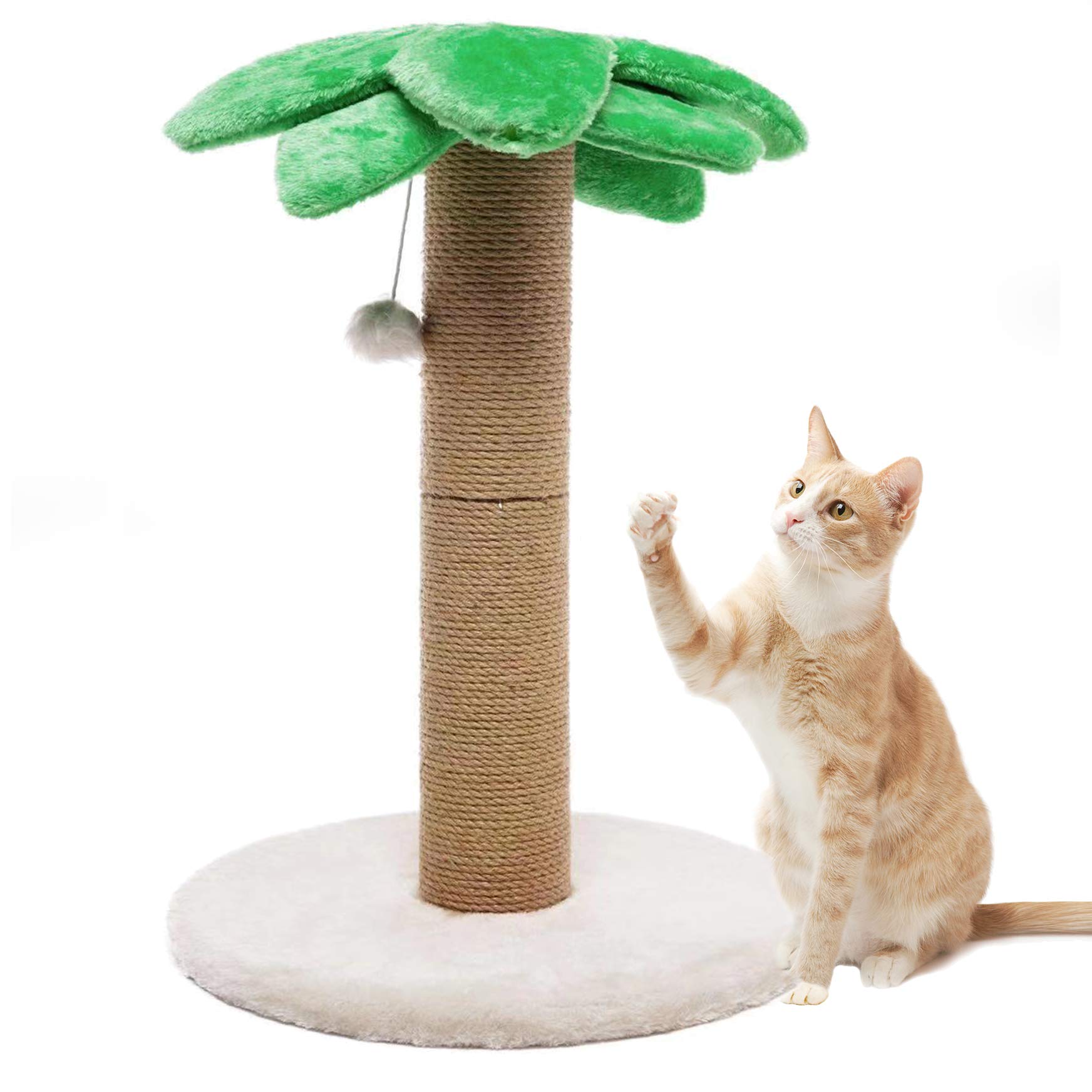
Sisal rope scratching posts are made of tightly wound fibers, typically sourced from the agave sisalana plant. The rough texture of sisal rope provides an excellent scratching surface that helps cats shed dead claw sheaths, promoting healthy claw maintenance. Sisal rope scratching posts are durable and can withstand prolonged scratching.
Cardboard scratching posts
Cardboard scratching posts are constructed using layers of corrugated cardboard, creating a textured surface that cats find appealing. Cardboard posts are often economical and disposable, making it easy to replace them when worn-out. However, they may not be as durable as other materials.
Carpeted scratching posts
Carpeted scratching posts have a fabric covering, typically made of carpet, that provides a softer scratching surface for cats. The texture of the carpet can be attractive to cats and is often combined with other materials, such as wood or sisal, to offer a variety of scratching options.
Wooden scratching posts
Wooden scratching posts are typically made of sturdy and durable wood, such as pine or cedar. They provide a solid scratching surface and can be treated or left natural. Wooden posts can be aesthetically pleasing and blend well with various home decors.
Selecting the Best Material for Replacement Scratching Posts
When choosing replacement scratching posts, selecting the right material is essential. Each material offers different advantages and may appeal to your cat in varying ways. Consider the following options:
Sisal
Sisal is a popular material for scratching posts due to its rough texture that cats find satisfying to scratch. Sisal is durable and can withstand extended use without fraying. Additionally, sisal is a natural fiber, which may make it more appealing to cats since it closely mimics the texture of tree bark.
Cardboard
Cardboard scratching posts are affordable and provide an excellent scratching texture for cats. They are often preferred by cats that enjoy a softer scratching surface. Keep in mind that cardboard posts may not be as long-lasting as other materials and may need more frequent replacement.
Carpet
Carpeted scratching posts offer a softer surface for cats to scratch. Cats that enjoy kneading or prefer a more cushioned feel under their paws may find carpeted posts more appealing. Ensure the carpet is securely attached to the post to prevent it from fraying or unraveling over time.
Wood
Wooden scratching posts provide a solid and durable surface for cats to scratch. They are often preferred by cats that enjoy a more stable and sturdy scratching experience. Wooden posts can complement various home decors and are typically more aesthetically pleasing compared to other materials.
Consider your cat’s scratching preferences, durability, and maintenance requirements when selecting the best material for replacement scratching posts.
Tips for Properly Introducing and Training Cats to Use New Scratching Posts
Introducing new scratching posts to your cat requires patience and positive reinforcement. Follow these tips to help your cat adjust to their new scratching surface:
Placement of the new scratching post
Position the new scratching post in an area where your cat frequently scratches or lounges. This will increase the likelihood of your cat noticing and using the new post. Additionally, ensure the post is stable and won’t wobble or tip over when your cat scratches it.
Using pheromone sprays or catnip to attract cats
To attract your cat to the new scratching post, try using pheromone sprays or sprinkling dry catnip on and around the post. These scents can stimulate your cat’s interest and curiosity, making them more likely to investigate and use the new scratching surface.
Encouraging and rewarding desired behavior
When you observe your cat using the new scratching post, provide positive reinforcement such as praise, treats, or playtime. This rewards your cat for the desired behavior and reinforces the association between the scratching post and positive experiences.
Redirecting cats from inappropriate scratching
If your cat continues to scratch inappropriate surfaces, gently redirect them to the new scratching post. Use toys or treats to guide their attention towards the post and encourage them to scratch there instead. Consistency and patience are key in redirecting your cat’s scratching behavior.
DIY Options for Replacing Cat Tree Scratching Posts
If you enjoy crafting and want a more personalized touch, consider making your own replacement scratching posts. Here are some DIY options:
Creating a sisal rope scratching post
To create a sisal rope scratching post, you’ll need a sturdy base, such as a wooden post or a PVC pipe, and sisal rope. Start by wrapping the base tightly with the sisal rope, securing it with hot glue or screws at regular intervals. Continue wrapping the rope until the entire surface is covered. Ensure the rope is taut and that there are no loose ends that may entangle your cat’s claws.
Making a cardboard scratching pad
To make a cardboard scratching pad, gather several layers of corrugated cardboard. Cut them into the desired size and shape, then stack them on top of each other. Secure the layers together using non-toxic glue or strong tape. For added durability, cover the sides of the pad with fabric or carpet remnants.
Building a wooden scratching post
Building a wooden scratching post requires woodworking skills and tools. Start by constructing a stable base using wood. Attach a tall wooden post securely to the base, ensuring it is stable and wobble-free. Enhance the scratching surface by attaching sisal rope or a carpeted panel to the post. Your wooden scratching post can be customized with additional features like platforms or perches.
Recommended Cat Tree Scratching Posts
While there are numerous options available, here are three recommended cat tree scratching posts to consider:
Brand A – Vertical sisal scratching post
Brand A offers a sturdy and tall vertical scratching post made with high-quality sisal rope. The post is durable, ensuring long-lasting use, and provides vertical scratching space for your cat to exercise and maintain their claws. It comes with a plush resting spot at the top, adding an extra element of comfort for your cat.
Brand B – Angled carpeted scratching post
Brand B provides an angled scratching post covered in soft, high-quality carpet material. The angled design offers a versatile scratching surface, accommodating your cat’s different scratching preferences. Additionally, the scratching post is attached to a sturdy base, ensuring stability during vigorous scratching sessions.
Brand C – Horizontal cardboard scratching pad
Brand C offers a disposable, yet high-quality, horizontal cardboard scratching pad. Made with multiple layers of corrugated cardboard, the scratching pad provides an enticing surface that satisfies your cat’s scratching needs. The pad is affordable and easy to replace, making it a convenient choice for those looking for a cost-effective option.
Understanding the Pricing Range for Cat Tree Scratching Posts
The price of cat tree scratching posts can vary depending on several factors:
Factors influencing the price
The material, size, quality, and brand of the scratching post can influence its price. Scratching posts made with durable materials such as sisal or wood tend to have a higher price point compared to cardboard or carpeted options. Additionally, larger scratching posts with multiple features like perches or toys may be more expensive than simpler designs.
Average cost of replacement scratching posts
On average, replacement scratching posts can range from $10 to $100, depending on the factors mentioned above. It’s essential to consider the quality and durability of the post when making a purchase. Investing in a higher-quality scratching post may save you money in the long run, as it will last longer and better withstand your cat’s scratching habits.
Tips for Extending the Lifespan of Cat Tree Scratching Posts
To extend the lifespan of your cat tree scratching posts, consider the following tips:
Regularly trimming your cat’s claws
Keep your cat’s claws trimmed to reduce the amount of damage they can cause to the scratching posts. Regular trimming also minimizes the risk of your cat’s claws getting caught or stuck in the post’s material, prolonging its lifespan.
Providing alternative scratching surfaces
In addition to the cat tree scratching posts, offer alternative scratching surfaces such as horizontal or vertical scratching pads or mats. This provides your cat with additional options and helps distribute the wear across different surfaces.
Keeping the scratching posts clean
Regularly clean the scratching posts to remove any dirt, debris, or excess cat hair. This not only keeps the posts looking fresh but also helps maintain their durability. Use a soft brush or vacuum attachment to gently remove debris, and spot-clean with a cat-safe cleaner if necessary.
Conclusion
Replacing worn-out cat tree scratching posts is essential for maintaining your cat’s well-being and protecting your furniture. By understanding why scratching posts wear out, the negative consequences of not replacing them, and the benefits of regular replacement, you can prioritize your cat’s scratching needs. Additionally, considering factors such as your cat’s scratching behavior, the condition of the cat tree, and the right type of replacement scratching post will ensure you select the most suitable options. Whether you choose ready-made scratching posts or opt for DIY options, creating an enticing and durable scratching surface for your cat is crucial. By following tips for proper introduction and training, you can guide your cat towards using the new scratching posts effectively. Remember to monitor the lifespan of the scratching posts, extend their durability through regular maintenance, and consider investing in higher-quality options. With the right scratching posts, you can provide your cat with a satisfying outlet for their natural behaviors while preserving the harmony in your home.